Cellulose triacetate(1946–Present)
A non-flammable film base developed as a replacement for cellulose nitrate. From the late 1940s it became the standard professional and non-professional motion picture film base worldwide.
Film Explorer
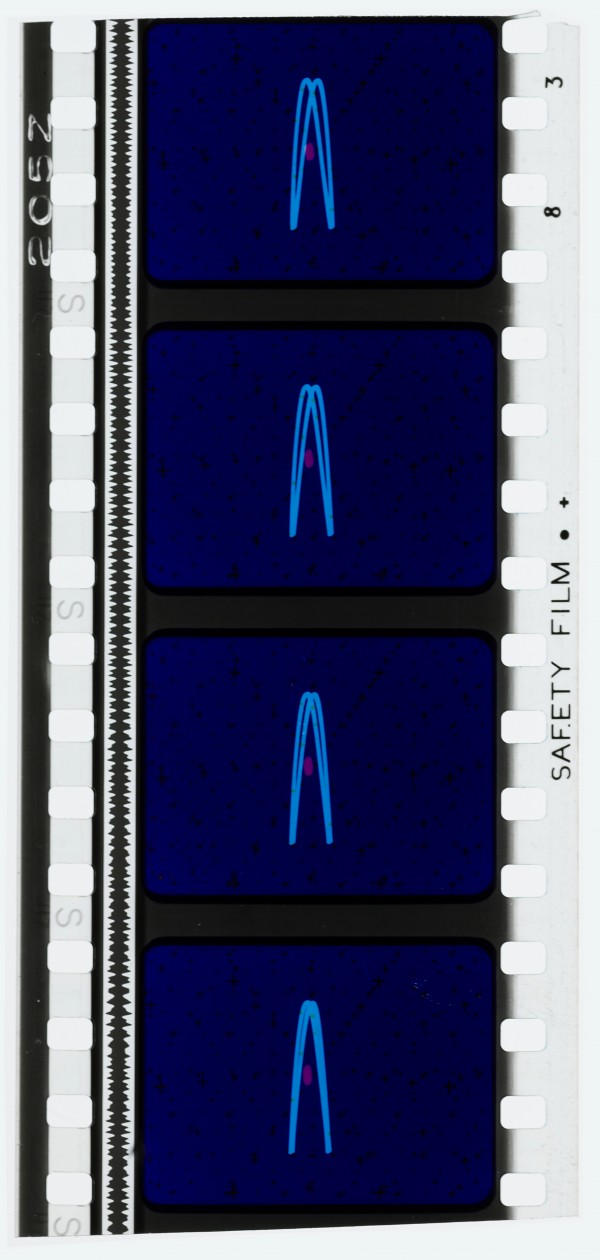
A 35mm Technicolor dye-transfer print of Norman McLaren’s 3-D Now is the Time (to put on your glasses), on 1951 cellulose triacetate base, finished at Kodak Ltd’s British plant in Harrow, United Kingdom. In addition to “SAFETY FILM” along the film’s edge, British Kodak stock also features a prominent “S” between the perforations.
National Science and Media Museum, Bradford, United Kingdom.
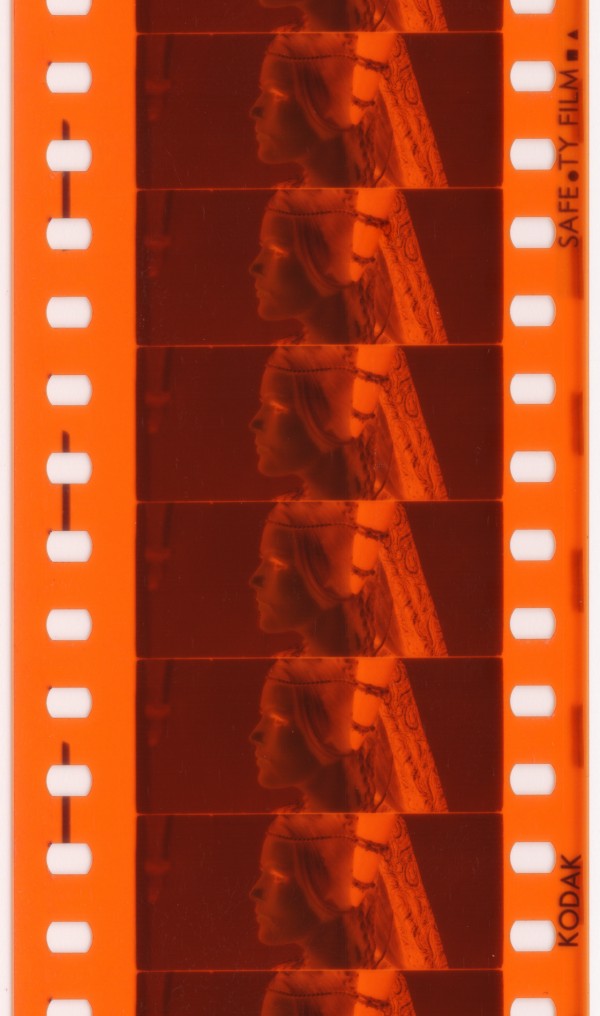
The 35mm Eastman Color Techniscope camera negative for Lucrezia (Osvaldo Civirani, 1968). All Eastman Kodak cellulose triacetate-base films are clearly marked “SAFETY FILM”. The placement of the dot between the letters of SAFETY reveals this particular negative was finished at Kodak’s French plant in Vincennes.
Cineteca Nazionale, Rome, Italy.
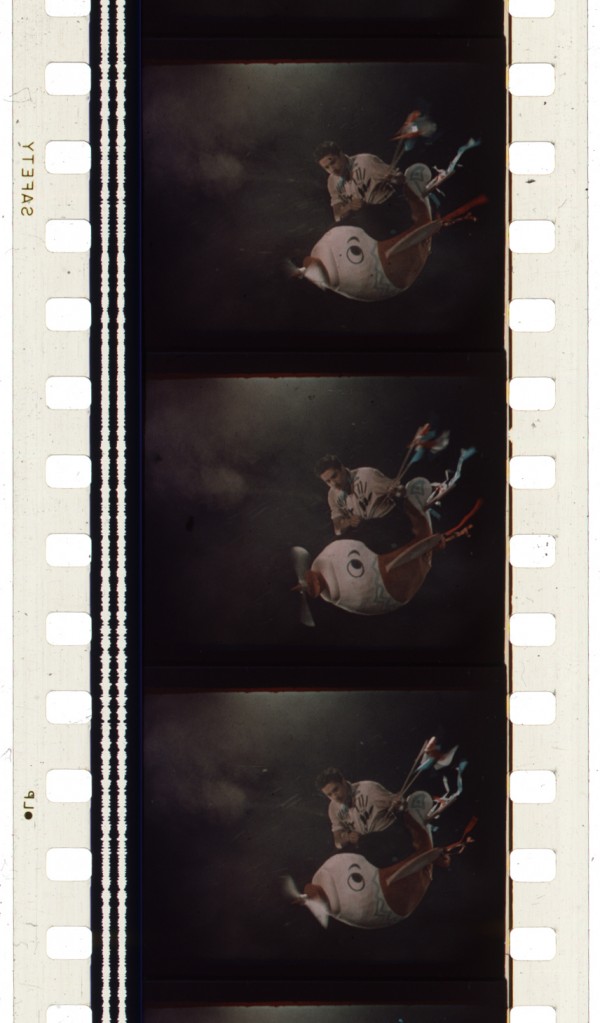
A restored 35mm print of ¡¡Todo es posible en Granada!! (1954), printed on low-fade Fujicolor LP print stock on cellulose triacetate base in the 1980s. “SAFETY” is clearly displayed along the film’s edge.
Filmoteca Española, Madrid, Spain.

The opening title of Antologia del cinema italiano. Il film muto (Antonio Petrucci, 1956) on Ferrania C7 panchromatic B/W negative on cellulose triacetate base. “SAFETY” is clearly displayed along the film’s edge.
Cineteca Nazionale, Rome, Italy.
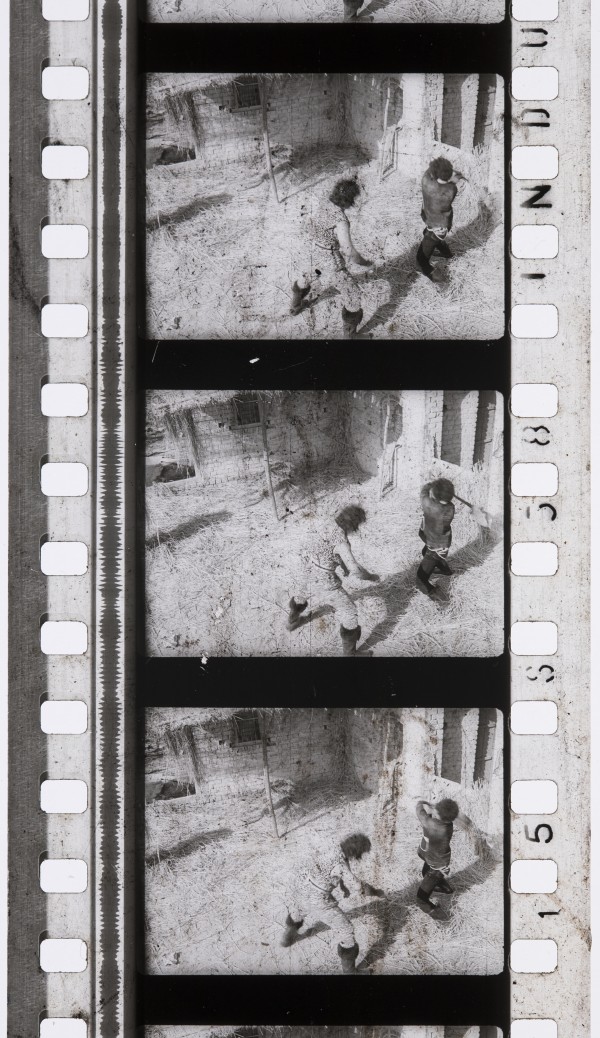
A 35mm B/W print of the Pakistani feature Cheeta Chalbaaz (Altaf Hussain, 1978), on Indu cellulose triacetate stock, made in India by the Hindustan Photo Films Manufacturing Company. Here, the “S” between the perforations indicates safety stock.
George Eastman Museum, Rochester, NY, United States.
Identification
B/W or color.
Triacetate film base commonly has “SAFETY” or “S” on the edge of the film to distinguish it from flammable nitrate film stock, regardless of manufacturer. For example, Agfa, Orwo and Indu used the letter “S” to indicate safety film base (Berriatúa & Blot-Wellens, 2020), while Eastman Kodak used “SAFETY FILM”. In the Soviet Union, the safety notation was in Cyrillic: “БЕЗОПАСНАЯ” / “Bezopasnaia” / “safety” or “ТРИАЦЕТАТНАЯ” / “triatsetatnaia” / “triacetate” (Bagrov, 2020).
Cellulose triacetate base was widely used for fullcoat magnetic sound film from the 1950s into the late 1970s.
B/W or color.
Triacetate film base commonly has “SAFETY” or “S” on the edge of the film to distinguish it from flammable nitrate film stock, regardless of manufacturer.
History
For the first years of cinema, professional motion picture film was made of cellulose nitrate, which was highly flammable and extremely dangerous. Many deadly accidents occurred all around the world, so from the outset a non-flammable film base was sought, especially for home, amateur and military use. The earliest attempt came in 1904, when Cottrell Walter Parkin and Alfred Williams were granted a patent for a method of inhibiting the flammability of nitrate. In the 1910s, many manufacturers brought their first “safety” film to the market: Eastman Kodak with a 22mm film for Edison’s Home Kinetoscope, Pathé for its 28mm home projection format, and the Lumière company marketed a non-flammable 35mm film produced by a process called “denitrification”. From these first attempts onward, the goal was to match the physical and photographic performance of cellulose nitrate film using different ingredients and production methods: diacetate, triacetate, propionates, butyrates, palmitates, stearates, benzoates, acetonitrile, acetyl propionate, acetyl butyrate, propionate–butyrates, etc. The first successful safety films were cellulose diacetate, cellulose acetate propionate and cellulose acetate butyrate, used mostly for small-gauge and military film stocks before 1950. These early safety prints wore out quickly, fell short of nitrate in photographic quality and had insufficiently transparent support. Safety film was also one-third more expensive to manufacture than nitrate (Fordyce, 1976).
Eastman Kodak in the United States was the first to develop cellulose triacetate film. This new “high-acetyl” safety stock was introduced to the film industry on an exploratory basis in 1946, and began to be used more extensively from 1947 as a release print stock. Among these early trade tests were a series of Trucolor double-coated prints (emulsion on both sides of the base) for Republic Pictures, and numerous unannounced “sneak” tests intended to establish whether projectionists would encounter any unexpected handling problems (Mitchell, 1952). Commercial distribution of triacetate film began in 1948, and by 1950 Kodak claimed that 85 per cent of the industry’s conversion had been completed, although many newsreels continued to use the cheaper nitrate stock (International Projectionist, 1950b). Production of cellulose nitrate was completely discontinued at Kodak by 1951 (Eastman Kodak, 2026).
Elsewhere around the world, the conversion from cellulose nitrate to cellulose triacetate was typically not as swift.
- Agfa in Germany and Gevaert in Belgium produced safety base film stock from the end of the 1940s (Berriatúa & Blot-Wellens, 2020).
- In France, Pathé, formerly Europe's largest film manufacturer, had already ceased independent production after its 1927 merger with Eastman Kodak, which took over operations at the Vincennes plant and later converted it to safety film production as part of Kodak's global transition from 1948. The transition was definitively regulated by the “Décret No. 61–133 du 3 février 1961”, which prohibited the circulation, distribution and projection of motion picture film on a flammable base.
- In Italy, Ferrania began converting its plant from nitrate to acetate production in 1947. In 1949, the Italian government forbade the use of cellulose nitrate film for shooting and public projection (Circolare del Ministero dell’Interno n. 53 del 20/04/1949) but nitrate continued to circulate in outlying cinemas and in film laboratories for intermediate printing copies. One example is the use of Ferrania 16mm nitrate film for 16mm reductions of theatrical films.
- In the post-war period, Fuji turned to a cellulose triacetate base, commissioning Dai Nippon Celluloid in May 1949 to research the production of triacetate flakes, a project supported by a series of government incentives introduced in August 1951 for the industrialization of 35mm safety film. Mass-production technology was established in December 1952, a dedicated cellulose triacetate plant began operating in September 1954, and all cinema projection copies had been converted by the end of that year. The conversion of all remaining film stocks (including X-ray and other general-purpose films) was completed by May 1958. This achievement was recognized in the spring of 1959 with a Chemical Technology Award from the Chemical Society of Japan to the company's director, Kōzō Kitajima, and the engineers involved at Dai Nippon Celluloid (Fujifilm, n.d.).
- In the USSR, the Svema factory in Shostka began experimental production of triacetate for motion picture film and magnetic tape in 1954, but did not begin commercial production until 1964 (Kozlov et al., 1976). Nitrate film continued to be produced and used in the USSR until 1971 (Bagrov, 2020).
- Domestic production of triacetate film at the Baoding Film Stock Plant in China began in 1964 (Zhu, 2024).
- In India, the Hindustan Photo Films Manufacturing Company Limited produced Indu cellulose triacetate base from 1969 (Khairnar & Chatterjee, 2026).
For many years the two film bases, nitrate and triacetate, coexisted, and many manuals gave instructions for handling them. Kodak’s Storage and Preservation of Motion Picture Film manual of 1957, for example, compared the two materials and gave guidelines for their storage. It warned that the two bases should never be stored together, because a fire from nitrate film — or even the off-gases of its decomposition – could damage triacetate reels (Eastman Kodak Company, 1957).
Once the initial doubts and resistance related to image quality and cost had been overcome, triacetate became the most widespread film base for both professional and non-professional use. Its adoption was so widespread and transformative that, in 1949, the Academy of Motion Picture Arts and Sciences awarded the Eastman Kodak Company a Scientific and Technical Award for the development and introduction of safety-base motion picture film, marking the rapid industrial consolidation of acetate film as a safe alternative to nitrate (Eastman Kodak, 2026; Movie Makers, 1950). Besides film base, cellulose triacetate has also been used for photographic products (roll film for still cameras, slide film, X-ray sheets), a wrinkle-resistant clothing fiber, packaging (plastic sheets, Scotch tape), dolls and toys, and contemporary art materials. Cellulose triacetate was the initial base for magnetic tapes (audio and video), although it was gradually replaced by polyester, which remains in use today (Schüller & Häfner, 2014).
Because of its almost universal use, triacetate safety film is the most common support found in film archives around the world today. Its introduction was one of the causes of the loss of many nitrate prints: for years nitrate films were duplicated by production companies, distributors and film archives onto triacetate base and then destroyed. This happened primarily for safety reasons but also because of the common misconception that triacetate film would last longer than nitrate (Edmondson, 2016; Cherchi Usai, 2001). Despite the optimism around acetate film expressed since the time of its introduction, it was subsequently discovered that the film base itself can degrade rapidly, a process known colloquially since the 1980s as “vinegar syndrome” (Cherchi Usai, 1991). Besides producing the characteristic smell of acetic acid, vinegar syndrome softens, deforms and shrinks the film base as it grows more severe, eventually attacking the emulsion and causing the image to disappear (Reilly, 1993).
By the end of the 1990s, another film base had partially replaced triacetate in the 35mm market: polyester. Polyester was developed in the 1950s by DuPont and was first used by Fuji from 1965, while Kodak began limited manufacture of its own polyester product line, known as Estar, in the 1960s. The earliest film formats to employ this base were Single 8 and 16mm. It was not adopted for theatrical film distribution, however, until the mid-1990s, when it almost universally replaced triacetate for 35mm projection prints, while camera negatives and intermediate film materials continued to be produced on triacetate base (Frederick Knauf, pers. comm., May 29, 2026).
Selected Filmography
The film was shot on both nitrate and triacetate camera negatives, representing the transitional period between the two film bases.
The film was shot on both nitrate and triacetate camera negatives, representing the transitional period between the two film bases.
One of the first films shot on Ferrania P30, the first negative developed for a triacetate base, in 1958–59. Ferrania later featured the stock in promotional booklets sent to cinematographers and directors, complete with film sample fragments demonstrating the negative's performance.
One of the first films shot on Ferrania P30, the first negative developed for a triacetate base, in 1958–59. Ferrania later featured the stock in promotional booklets sent to cinematographers and directors, complete with film sample fragments demonstrating the negative's performance.
A B/W Punjabi film from the “Lollywood” era starring Mustafa Qureshi and Badar Munir. Release prints were on Indu cellulose triacetate stock manufactured in India.
A B/W Punjabi film from the “Lollywood” era starring Mustafa Qureshi and Badar Munir. Release prints were on Indu cellulose triacetate stock manufactured in India.
Australia's first color feature film and the first film with an Aboriginal actor in the leading role. Shot on Gevacolor negative film and processed in England, distribution prints were on Gevaert safety base.
Australia's first color feature film and the first film with an Aboriginal actor in the leading role. Shot on Gevacolor negative film and processed in England, distribution prints were on Gevaert safety base.
C. R. Fordyce, in the Journal of the SMPTE (1949) cited the film as a test case in the improvement of the triacetate film base.
C. R. Fordyce, in the Journal of the SMPTE (1949) cited the film as a test case in the improvement of the triacetate film base.
Original release prints were on cellulose nitrate base, but a surviving 1952 Agfacolor reissue print has been identified through edge-code analysis as cellulose triacetate stock – an early example of Agfa triacetate film.
Original release prints were on cellulose nitrate base, but a surviving 1952 Agfacolor reissue print has been identified through edge-code analysis as cellulose triacetate stock – an early example of Agfa triacetate film.
A Roy Rogers western in Trucolor. From 1947, all Trucolor prints were made on Eastman Two-Color Print Safety Film, Type 5380.
A Roy Rogers western in Trucolor. From 1947, all Trucolor prints were made on Eastman Two-Color Print Safety Film, Type 5380.
Documentary chronicling the royal visit of Princess Elizabeth and the Duke of Edinburgh to Canada and the United States. Among the earliest known uses of Eastman Color Negative 5247 and Print Film 5381, both manufactured exclusively on cellulose triacetate base.
Documentary chronicling the royal visit of Princess Elizabeth and the Duke of Edinburgh to Canada and the United States. Among the earliest known uses of Eastman Color Negative 5247 and Print Film 5381, both manufactured exclusively on cellulose triacetate base.
A feature-length film based on a Beijing opera, among the first titles produced on HZ-1 positive cellulose triacetate stock, manufactured by the Baoding Film Stock Plant in China.
A feature-length film based on a Beijing opera, among the first titles produced on HZ-1 positive cellulose triacetate stock, manufactured by the Baoding Film Stock Plant in China.
Lineage
Technology
Cellulose triacetate is a flexible semi-synthetic plastic that was introduced as a replacement for the highly flammable cellulose nitrate stock in the late 1940s. Unlike the early safety film base cellulose diacetate, which was less dimensionally stable, cellulose triacetate was produced by fully acetylating cellulose, maximizing the acetic acid content at roughly 45 per cent to achieve superior stability (Craig, 1949: p. 7). To create acetate safety films, acetate groups (CH3CO) are grafted onto the cellulose molecule.
On an industrial scale, such film is manufactured by reacting cellulose (typically derived from wood pulp or cotton fibers) with a mixture of acetic anhydride (acetylating agent), acetic acid (solvent) and sulfuric acid (catalyst) until the hydroxyl molecule groups are converted to acetyl groups to a degree of substitution of nearly three. This process is called acetylation and produces what is known as triacetate flakes. (Eastman Kodak had a wholly owned subsidiary, the Tennessee Eastman Company, to manufacture such flakes from raw materials for film base production.)
The subsequent steps in the production of cellulose triacetate film are:
1. The cellulose triacetate flakes are dissolved in a solvent mixture to form a syrupy-textured “dope” solution, “which has the appearance of clear honey” (Craig, 1949: p. 7).
2. Plasticizers are added to improve flexibility and retard flammability.
3. The dope is filtered and extruded onto a continuously moving polished metal surface, known as a casting belt or drum.
4. The solvent evaporates as the polished surface moves, and by the time the surface reaches the end of its rotation the dope has hardened considerably and is stripped away as a thin film.
5. The film then passes through an oven or heating chamber, where more solvent evaporates – a process known as “curing” – and the film attains its final form.
Later steps include the coating of a subbing layer and either a light-sensitive photographic emulsion or magnetic oxide for sound recording.
Lavoro a Ferrania (Work at Ferrania, 1957) was an industrial documentary illustrating work across all sections of the Ferrania factory in Italy. A section on cellulose acetate manufacturing begins at approximately 3 minutes in.
Ferrania Film Museum, Cairo Montenotte, Italy. Cairo Montenotte, Italy.
Eastman Kodak's trajectory from market leader for much of the 20th century to its implosion in the 2010s exemplifies the expansion and decline of triacetate film production for motion picture and consumer photographic products. From the 1920s, Kodak’s film base manufacturing was designed for high volumes with no flexibility (Building 53 at Kodak Park in Rochester, NY, had 24 triacetate manufacturing machines), which later made it impossible to scale down as demand fell following the introduction of digital film distribution in the early 2000s. From the 1980s through the 2010s, some product lines were consolidated, but the enormous Building 53 still required all its machines to run simultaneously to remain viable. In the final years, with only 4–5 of the 24 machines active, the cost of keeping the whole building open could no longer be justified, and the plant closed in June 2013 – just months before consumer film demand began to pick up again. Subsequent cellulose triacetate base manufacturing was outsourced (Frederick Knauf, pers. comm., May 29, 2026).
The main conservation issue with triacetate film base is the so-called “vinegar syndrome”. The name was coined by the British film preservationist Harold Brown when, in 1985, he was in Manila, the Philippines, for a training program and, while visiting a film archive storage facility, detected the pungent odor now recognized as the first sign of vinegar syndrome: the acetic acid off-gassing of degrading triacetate film base smells like vinegar (Brown, 2002). The chemical process of the degradation of cellulose triacetate has been explained by one of its most important investigators, James Reilly of the Image Permanence Institute:
In acetate film the side groups are not nitro (NO2) but acetyl (CH3CO). As with nitrate, all is well as long as these acetyl groups remain grafted onto the cellulose molecules. Detachment of the acetyl groups also can occur in the presence of moisture, heat, and acids, only, in this case, free acetic acid is liberated (Reilly, 1993).
The onset of vinegar syndrome is directly connected to less-than-ideal storage conditions (high relative humidity and/or temperature) and can be detected and quantified using readily available diagnostic tools. The most common are the Image Permanence Institute’s A-D strips and Dancan’s Dancheck strips, first introduced in the 1990s. Both types work in the same way: a blue strip impregnated with bromocresol green is placed on the surface of the reel for a fixed period that varies with the storage temperature, and changes color according to the concentration of acetic acid. Today, vinegar syndrome is a major problem across all film archives.
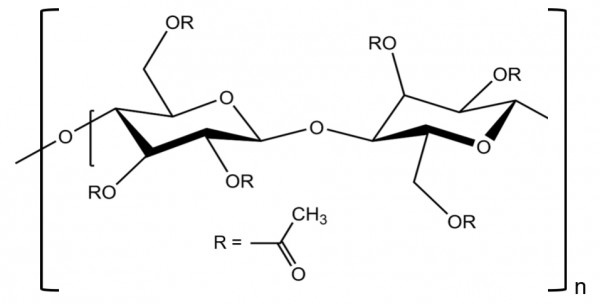
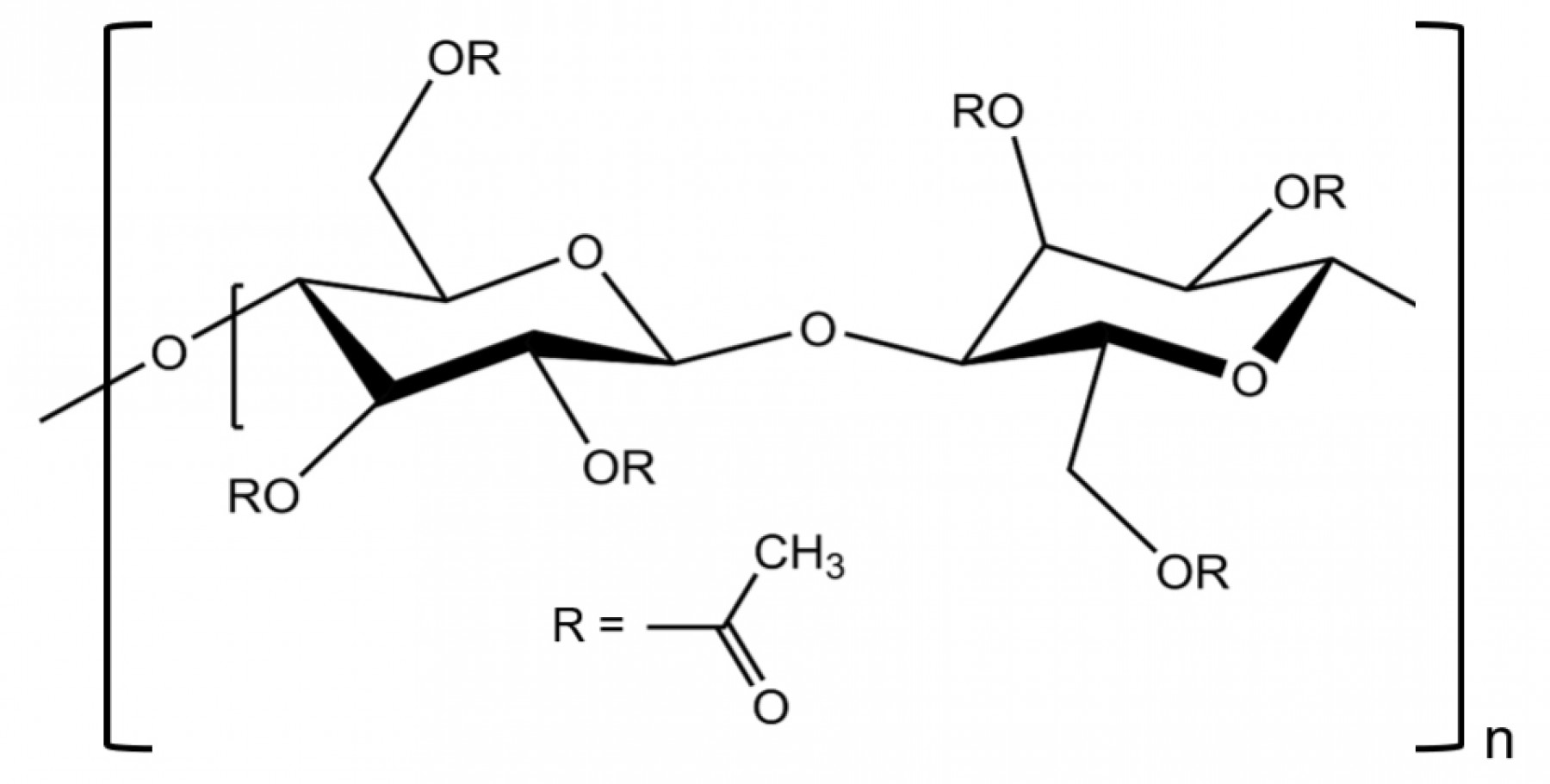
The molecular structure of cellulose triacetate film base.
Buttarelli, Alessia, Margherita Longoni, Valentina Rossetto & Silvia Bruni (2025). “Vibrational spectroscopy as a tool for the investigation of polymer bases in motion picture films: a comparison between mid-infrared, near-infrared and Raman techniques, Vibrational Spectroscopy, 139 (Jul.): pp. 1–10.
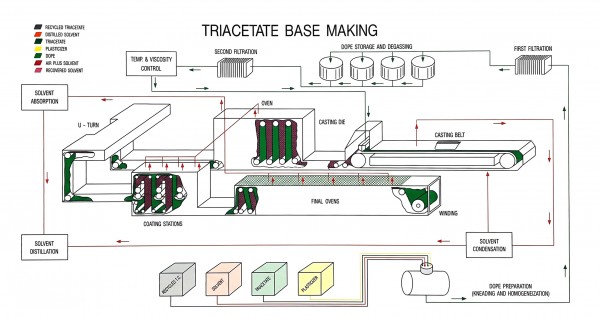

The multiple steps of cellulose triacetate base making. The process starts at the bottom of this diagram with dope preparation and ends with the film base being wound onto a large roll.
Ferrania Film Museum, Cairo Montenotte, Italy.


A former roll coating wheel, used by Eastman Kodak to cast cellulose triacetate film base. It is now on display on West Ridge Road in Rochester, NY. The inscription on the plaque reads: “This Roll Coating Wheel represents the beginnings of the acetate film manufacturing process for the Eastman Kodak Company. The acetate base is cast onto the wheel surface, cures enough to be stripped off after one revolution, and is conveyed through the coating machine for further curing and coating applications. This coating wheel is 18 feet in diameter and weighs approximately 25 tons”.
The Historical Marker Database. https://www.hmdb.org/m.asp?m=108714.
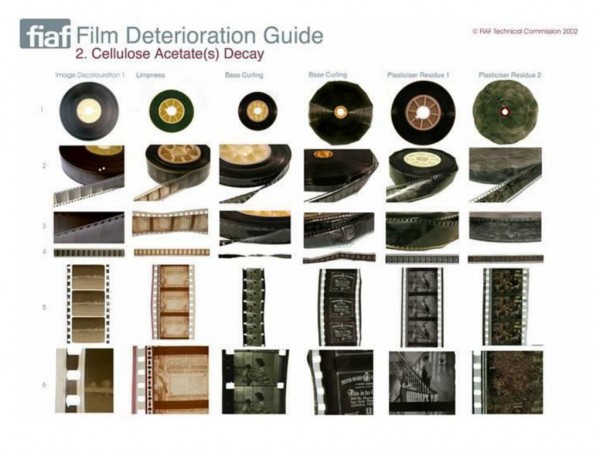
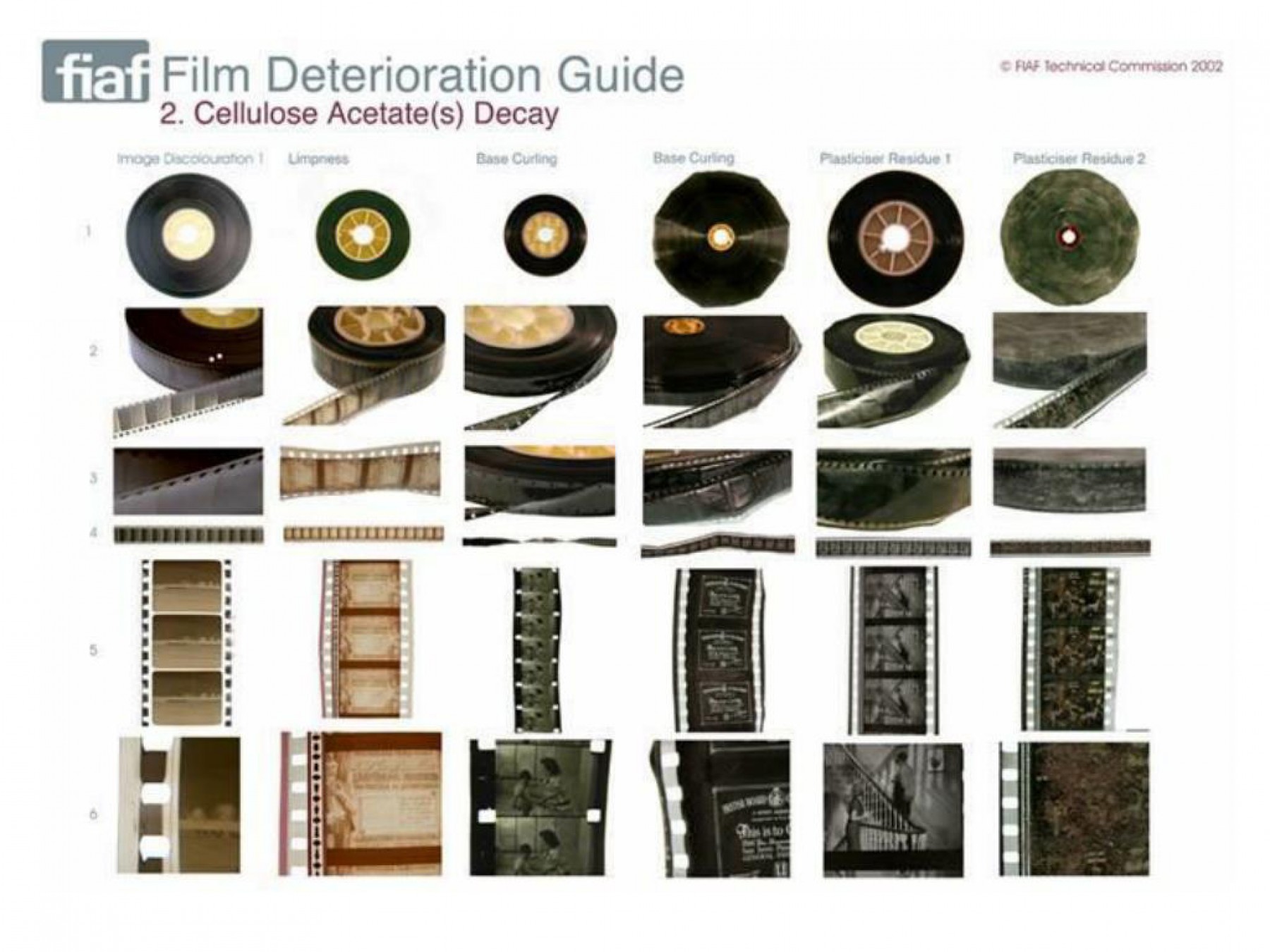
The International Federation of Film Archives’ Film Deterioration Guide (2002) illustrates the effects of vinegar syndrome on both the dimensionality of the film base and the image layer.
FIAF Technical Commission (2002). Film Deterioration Guide. Brussels: FIAF. https://www.slideserve.com/ermin/film-deterioration-guide
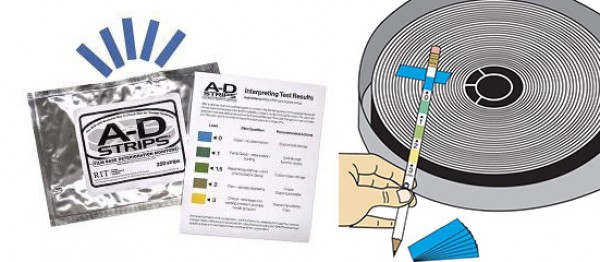
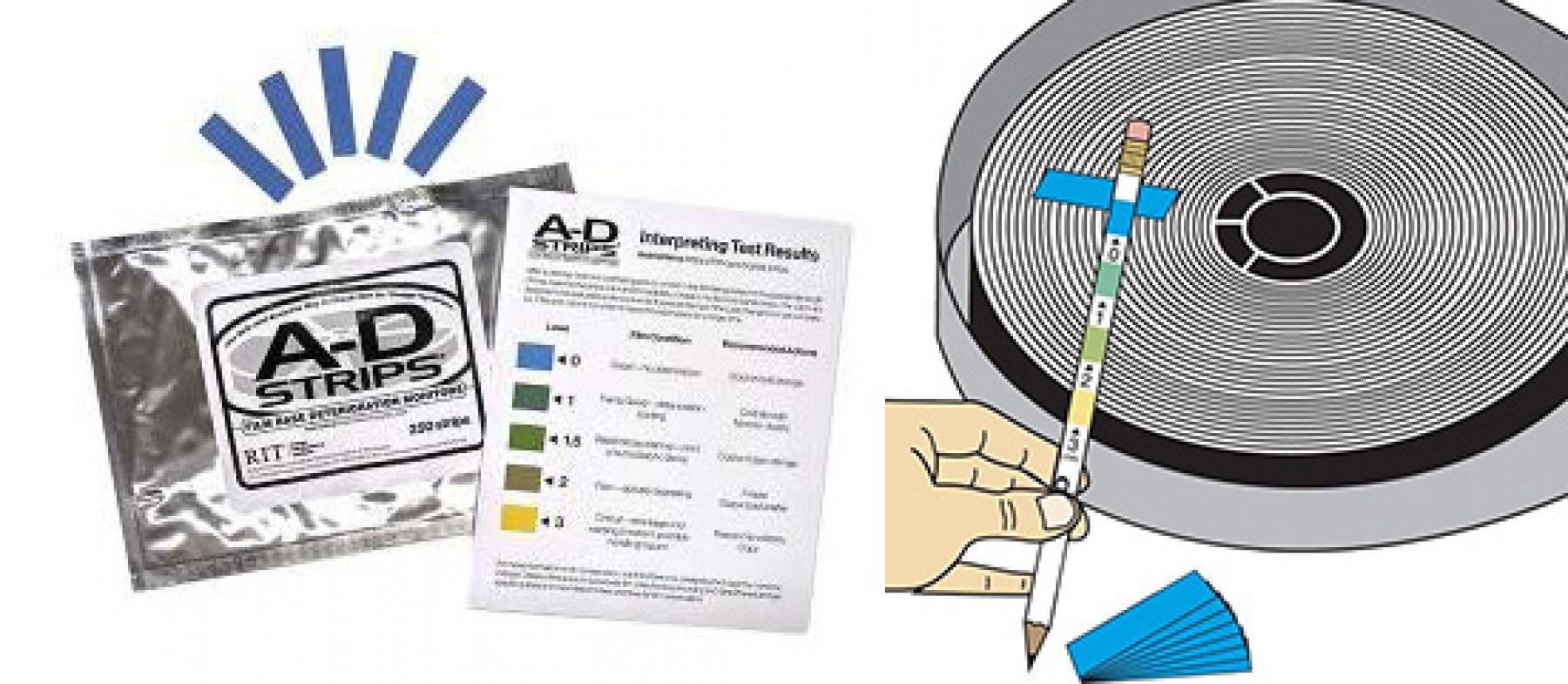
The Image Permanence Institute’s A-D [Acid Detection] Strips were first introduced in 1995. A strip is placed inside a film can and will change color (from blue to yellow) based on the acidity level of the air within the can.
Image Permanence Institute, Rochester Institute of Technology, Rochester, NY, United States. https://www.rit.edu/ipi/store/products/a-d-strips
References
Allen, N. S., M. Edge, J. H. Appleyard, T. S. Jewitt, C. V. Horie & D. Francis (1987). “Degradation of Historic Cellulose Triacetate Cinematographic Film: The Vinegar Syndrome”. Polymer Degradation and Stability, 19:4: pp. 379–87.
Bagrov, Peter (2020). “Preliminary Notes on Soviet Nitrate Film Stock and Other Aids to Identification of Russian and Soviet Films”. In Physical Characteristics of Early Films as Aids to Identification: New Expanded Edition, H. Brown & C. Blot-Wellens (eds.), pp. 285–305. Brussels: FIAF.
Berriatúa, Luciano & Camille Blot-Wellens (2020). “Agfa”. In Physical Characteristics of Early Films as Aids to Identification: New Expanded Edition, H. Brown & C. Blot-Wellens (eds.), pp. 257–66. Brussels: FIAF.
Brown, Harold (2002). “Trying to Save Frames”. In This Film Is Dangerous, Roger Smither & Catherine Surowiec (eds.), pp. 185–9. Brussels: FIAF.
Buttarelli, Alessia, Margherita Longoni, Valentina Rossetto & Silvia Bruni (2025). “Vibrational spectroscopy as a tool for the investigation of polymer bases in motion picture films: a comparison between mid-infrared, near-infrared and Raman techniques”. Vibrational Spectroscopy, 139: (Jul.): pp. 1–10.
Cherchi Usai, Paolo (1991). “‘Nitrate Can’t Wait’? Safety Won’t Wait, Either”. FIAF Bulletin, 43: pp. 2–4.
Cherchi Usai, Paolo (2001). “La cineteca di Babele”. In Storia del cinema mondiale. V. Teorie, strumenti, memorie, Gian Piero Brunetta (ed.), pp. 969–78. Turin: Einaudi.
Craig, G. J. (1949). “Nitrate and Safety Film Base Characteristics”. British Kinematography, 14:1 (Jan.): pp. 7–16.
Del Amo García, Alfonso (2004). Film Preservation. Brussels: FIAF.
Eastman Kodak Company (1957). Storage and Preservation of Motion Picture Film. Rochester, NY: Eastman Kodak Company.
Eastman Kodak Company (2026). “Kodak Chronology 1940–1959”. Kodak.com (website). https://www.kodak.com/en/motion/page/chronology-of-film (accessed Aug. 25, 2026).
Edmondson, Ray (2016). Audiovisual Archiving: Philosophy and Principles. Paris: UNESCO.
Enticknap, Leo (2002). “The Film Industry’s Conversion from Nitrate to Safety Film in the Late 1940s: A Discussion of the Reasons and Consequences”. In This Film Is Dangerous, Roger Smither & Catherine Surowiec (eds.), p. 209. Brussels: FIAF.
Ferrania (1962). La fabbricazione dei prodotti sensibili (internal manual). Savona: Centro addestramento Ferrania.
FIAF Technical Commission (2002). Film Deterioration Guide. Brussels: FIAF.
Film Daily (1948). “Reveal Results of Acetate Base Trial”. The Film Daily, 94:31 (Aug. 12): p. 3.
Fordyce, Charles R. (1948). “Improved Safety Motion Picture Film Support”. Journal of the SMPE, 51:4 (Oct.): pp. 331–50.
Fordyce, Charles R. (1976). “Motion Picture Film Support: 1889–1976, An Historical Review”. Journal of the SMPE, 85:7 (Jul.): pp. 493–96.
Fujifilm (n.d.). “TAC-Based Development”. The History of Fuji Film (website). https://www.fujifilm.co.jp/corporate/aboutus/history/ayumi/dai2-04.html (accessed Aug. 26, 2026).
International Projectionist (1949). “Broaden Acetate Film Use”. International Projectionist, 24:8 (Aug.): p. 20.
International Projectionist (1950a). “Kodak to Supply DuPont with New Safety Film Base”. International Projectionist, 25:4 (Apr.): p. 18.
International Projectionist (1950b). “Conversion to Safety Film 85% Complete”. International Projectionist, 25:7 (Jul.): p. 26.
Khairnar, Leenali & Sreya Chatterjee (2026). “Indu”. In Film Atlas, James Layton (ed.). https://www.filmatlas.com/entry/686. Brussels: International Federation of Film Archives / Rochester, NY: George Eastman Museum.
Kozlov, Yurii, Lev Bohdanov, Viktor Niefiedchenkov & Yevheniia Riabaia (1976). Estafeta dobrykh del. Ocherk istorii Shostkinskogo ordena Oktiabrskoi Revoliutsii proizvodstvennogo obiedineniia Svema 50-ti letiia SSSR [A Relay of Good Deeds. Essay on the History of the Svema, Shostka Production Association After October Revolution 50th Anniversary of the USSR]. Kharkiv: Prapor.
Malm, Carl J., Charles R. Fordyce & Howard A. Tanner (1942). “Properties of Cellulose Esters of Acetic, Propionic, and Butyric Acids”. Industrial & Engineering Chemistry, 34:4: pp. 430–35.
Mitchell, Robert A. (1952). “Safety Film: Performance Characteristics”. International Projectionist, 27:10 (Oct.): pp. 5–9 & 29–30.
Movie Makers (1950). “Kodak Wins ‘Oscar’ for New Safety Film”. Movie Makers, 25:5 (May): p. 187.
Reilly, James M. (1993). IPI Storage Guide for Acetate Film. Rochester, NY: RIT.
Richard, A. P. (1948). “Le film ‘non-flam’ pas encore utilisable pour les copies d’exploitation”. La cinématographie française, 1287–88 (Nov. 30): p. 11.
Rossetto, Valentina & Lisa Vergelli (2026). “Beyond pH 4.0: Characterising Material Degradation in Motion Picture Films with Advanced Vinegar Syndrome”. Journal of Film Preservation, 115.
Schüller, Dietrich & Albrecht Häfner (eds.) (2014). Handling and Storage of Audio and Video Carriers. London: International Association of Sound and Audiovisual Archives.
Shanebrook, Robert L. (2016). Making Kodak Film: The Illustrated Story of State-of-the-Art Photographic Film Manufacturing. Rochester, NY: Robert L. Shanebrook.
Zhu, Zhaoyu (2024). “Chinese Colour Film Stocks”. In Film Atlas, James Layton (ed.). https://www.filmatlas.com/entry/608. Brussels: International Federation of Film Archives / Rochester, NY: George Eastman Museum.
Patents
Parkin, Cottrell Walter & Alfred Williams. An Improved Process for Rendering Celluloid or Nitric Cellulose Compounds Non-inflammable. GB patent 190422381, filed October 18, 1904, and issued August 25, 1905. https://patents.google.com/patent/GB190422381A
Nadeau, Gale F. Manufacture of Photographic Film. US patent 2258997A, filed November 1940, and issued October 1941. https://patents.google.com/patent/US2258997A
Schering, Ag. Process for the Production of Art Objects from Cellulose Derivatives. CH patent 235774A, filed November 27, 1942, and issued December 31, 1944. https://patents.google.com/patent/CH235774A
Spence, John & Sterling S. Sweet. Method of Preparing Flexible Cellulose Triacetate Materials. US patent 2336310A, filed January 1941, and issued December 1943. https://patents.google.com/patent/US2336310A
Bogin, Charles. Cellulose Triacetate Composition. US patent 2350300A, filed April 1943, and issued May 1944. https://patents.google.com/patent/US2350300A
Malm, Carl J. & Carlton L. Crane. Precipitation of Cellulose Triacetate. US patent 2469395A, filed March 1946, and issued May 1949. https://patents.google.com/patent/US2469395A
Fordyce, Charles R. & Bruce E. Gramkee. Cellulose Acetate Film-Forming Composition and a Film Made Therefrom. US patent 2739069A, filed November 1951, and issued March 1956. https://patents.google.com/patent/US2739069A
Compare
Related entries
Author
Valentina Rossetto is a historian and archivist specializing in film preservation and restoration. She works as film archivist at the Cineteca Nazionale in Rome, and as adjunct professor of Film Restoration in the MA program at the Italian Central Institute for the Restoration and Conservation of Archival and Library Heritage (ICPAL). Since 2024, she has been collaborating with the Department of Historical Studies at the University of Turin.
Prior to working at the Cineteca Nazionale, Rossetto was the film collection manager at the Archivio Nazionale Cinematografico della Resistenza, film archivist at the Museo Nazionale del Cinema, and a member of a two research projects at the University of Turin.
Rossetto is the author of the chapters “Shooting” and “Projection” in Cinema muto italiano: tecnica e tecnologia (Carocci, Rome 2004), and of “La conservazione dei film” in the collected volume Preservare il cinema. Restauro e conservazione del patrimonio filmico (forthcoming, 2026). Her essays on film conservation and restoration have been published in scientific journals such as Kermes, Color Culture and Science, and Vibrational Spectroscopy, as well as in the Journal of Film Preservation (FIAF).
Alessandro Bechis (Ferrania Film Museum), Lorena Canulli (Centro Sperimentale di Cinematografia) for the help with the image digitization, Anne Mares-Gourdet, Anke Wilkening, Kae Ishihara, Oleksandr Teliuk and AMIA Vinegar Syndrome working group. Special thanks also to Kae Ishihara and Oleksandr Teliuk for details of Fuji and Svema’s conversion dates.
Rossetto, Valentina (2026). “Cellulose triacetate”. In James Layton (ed.), Film Atlas. www.filmatlas.com. Brussels: International Federation of Film Archives / Rochester, NY: George Eastman Museum.